




Britain is tightening rules on misleading discounts just as prices are becoming more fluid and personal. The fixed tag once promised the same number to every shopper. Algorithms are learning how much each of us might pay.
Two shoppers can now enter the same retailer and meet different versions of the price.
One has a loyalty account containing years of purchases. Another is new. One receives a promotion selected for them; the other sees the standard offer. Online, the distinction can be quieter still. A price, discount, bundle or order of products may change according to what a system believes about the person looking.
The number still appears with the calm authority of a fact. Increasingly, it can be a decision.
In August 2026, the British government announced plans to prohibit misleading discount claims, including offers created by briefly inflating a price before apparently reducing it. The immediate target is the fake bargain. Behind it sits a larger question about what shoppers expect a price to mean.
At the same time, the Bank of England has been tracking a broader change. Its survey of more than 1,600 businesses found that 21 per cent of consumer-facing firms were using market-responsive pricing tools, with 31 per cent expecting to use them within a year. Personalised pricing, mostly in simpler forms such as loyalty schemes and customer accounts, was already widespread across the sectors it studied.
Several different practices are often placed beneath the same label.
Dynamic pricing, personalised pricing and algorithmic pricing
Dynamic pricing changes a price in response to conditions such as demand, remaining capacity, stock or time.
Personalised pricing changes a price or promotion according to information about a customer or a group of similar customers.
Algorithmic pricing describes the technology used to recommend or set a price. An algorithm can produce either dynamic or personalised prices, or both.
None is automatically abusive. A cheaper off-peak train ticket and a higher fare at rush hour can make limited capacity work better. A targeted voucher can put a product within reach of someone who would not buy it at the standard price.
The difficult change begins when the price responds not to the state of the market, but to the seller's estimate of the buyer.
For most of retail history, that would not have seemed unusual. The fixed price was the unusual idea.
The number before the customer
In the Paris of the 1850s, a number attached to a piece of fabric carried a proposition that was still novel in much of retail: this is the price, whoever you are.
Au Bon Marché began as a modest dry-goods shop in 1838. Aristide Boucicaut became a partner in 1852 and, with Marguerite Boucicaut, helped transform it into the institution now remembered as an early modern department store. Its innovations arrived as a system. Goods carried fixed, visible prices. Customers could enter without an obligation to buy, handle merchandise, return purchases and have orders delivered. Lower margins were paired with faster stock turnover.
Boucicaut did not invent every practice from nothing. Other retailers in France, Britain and the United States were experimenting with marked prices, large assortments and more permissive forms of browsing. Le Bon Marché's achievement was to combine them at a scale that changed what shopping felt like. The store's own history records fixed prices, exchanges and reduced margins; modern retail histories likewise identify its visible price tags as central to the new model.
Under bargaining, a price emerged from an encounter. The seller could inspect the customer, judge their confidence, infer their urgency and begin high or low. The customer could challenge the opening demand, threaten to leave or reveal that another shop had offered less. Skill, time and social position affected the outcome.
A marked price rearranged that relationship. The merchant named the number before knowing how much this particular visitor wanted the item. The customer could browse without first entering a personal negotiation. They could compare two products, leave, return and find the same public offer waiting.
That apparent restraint was commercially useful. A vast store could not operate efficiently if every bolt of cloth required a private argument. Fixed prices made transactions faster, allowed sales staff to work to a common rule and supported a business built on volume rather than extracting the highest possible amount from each exchange.
The larger Le Bon Marché building, begun in 1869, turned retail into spectacle. Iron, glass, displays and an expanding range of departments encouraged visitors to remain inside, moving from one temptation to another. By the early 1880s, Émile Zola was studying the store while preparing Au Bonheur des Dames, his novel about a department store consuming the trade and attention around it.
The new emporium was not a charity. Its fixed prices formed part of a highly effective machine for selling more. Nor did the tag promise that the price was low, honest or permanent.
It promised something narrower: the offer was public.
What a fixed price changed
The most important feature of a fixed price is not that it stays fixed forever. It is that the seller commits to it before discovering the maximum a particular buyer would accept.
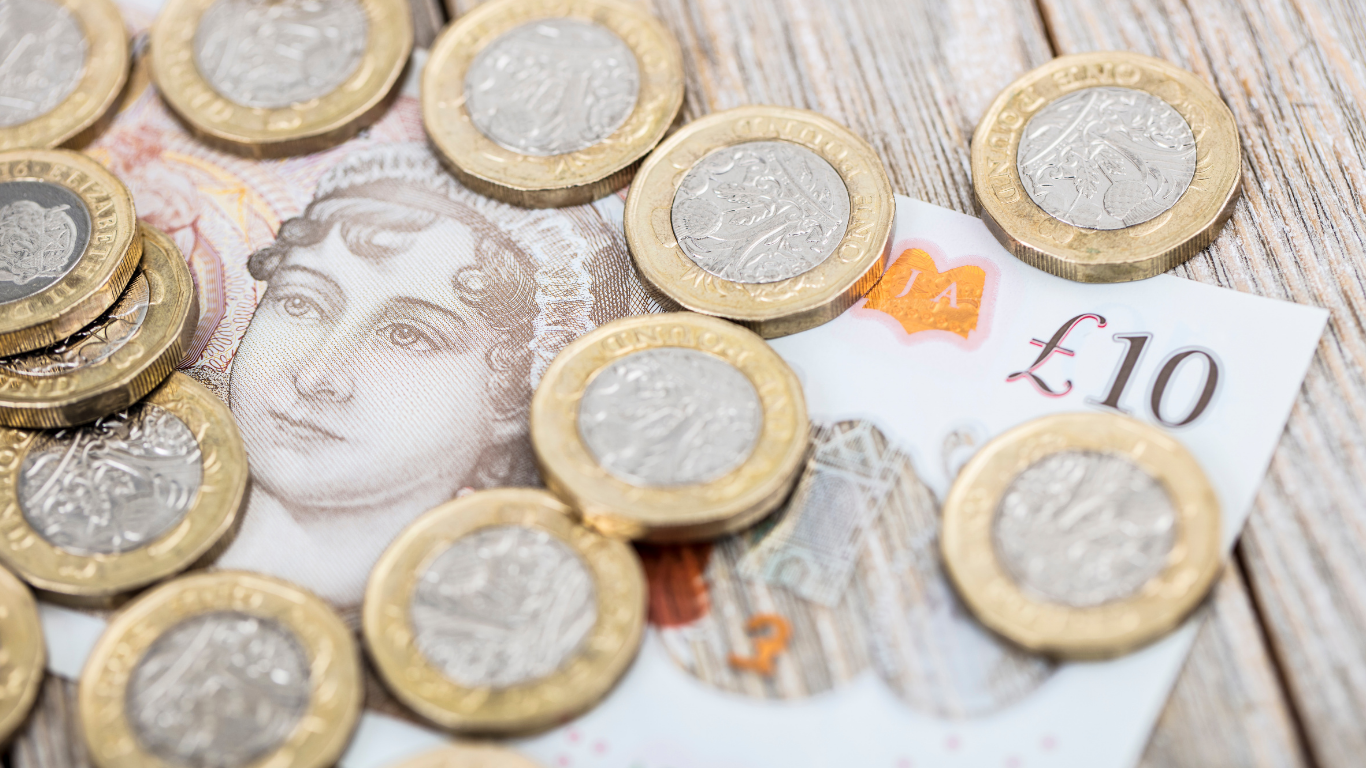
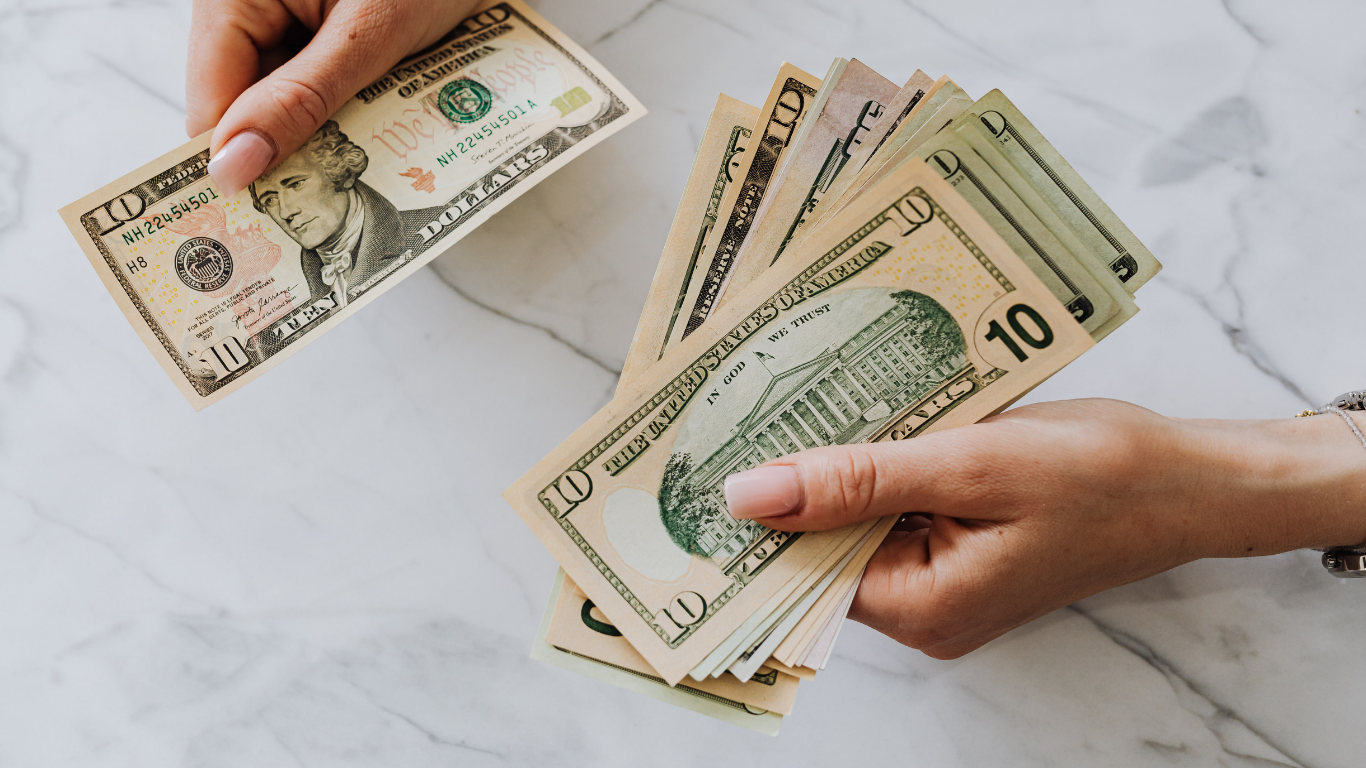
Economists call the gap between those two numbers consumer surplus. If a person would willingly pay £80 for an item priced at £50, they receive £30 of value beyond what they surrender. The retailer still makes the sale, but it leaves part of the possible gain with the customer.
Every profit-seeking seller would prefer to know where that upper limit lies. Under a single public price, it usually has to guess across an entire market. Charge too much and many customers disappear. Charge too little and willing buyers keep a larger surplus. The price is an imperfect compromise between different people's valuations.
A public tag also makes comparison possible. Another retailer can undercut it. A customer can tell a friend what they paid. A newspaper, regulator or price-comparison service can observe whether the offer changed. The same number becomes evidence shared by people who do not know one another.
Legal scholar Gali Racabi describes this arrangement as the “impersonal price”: visible, homogeneous across customers and not open to individual negotiation. It was not a natural destination for markets. It depended on shop labels, catalogues, advertising, consumer rules and a social expectation that a displayed price was a commitment.
That commitment never created perfect equality. Retailers offered seasonal sales, quantity discounts and different prices in different places. Students, pensioners and members of loyalty schemes could be treated as groups. A fixed price could be excessive, collusive or attached to a fictitious “was” price.
Even so, the system limited one particular power. The seller could classify the product, the time and the market. It could not easily classify each person standing at the counter.
When the number learns your name
Digital retail removes many of the practical limits that once protected the impersonal price.
Changing thousands of paper labels or reprinting a catalogue costs money. Changing a number in a database costs almost nothing. Economists call these expenses “menu costs”, after the literal cost of printing a new menu. When the menu becomes a screen, prices can move continuously.
The change is already visible in travel and hospitality. The Bank of England estimates that the share of UK hotel prices changing at least once a month has risen from roughly 15 per cent in 2005 to about 80 per cent today. A room on a busy Saturday and the same room on a quiet Tuesday are no longer treated as equivalent inventory.
That is dynamic pricing. The hotel is responding to demand, remaining rooms, competitors and the approaching date. Every shopper may still face the same offer at the same moment.
Personalised pricing goes further. It asks what the seller knows about the person requesting the room.
An online account can reveal purchase frequency, past discounts, searches, returns and the moments at which someone previously completed or abandoned an order. A device can supply location and browsing signals. Loyalty programmes connect named customers to baskets accumulated over years. Machine-learning systems can then group shoppers by their likely sensitivity to price and decide who needs an incentive.
The result need not be an individually calculated figure. One customer may receive a voucher that another never sees. A retailer may present a different bundle, withhold a promotion from someone likely to buy anyway or place higher-margin products more prominently. The visible list price can remain unchanged while the effective offer becomes personal.
The United States Federal Trade Commission examined intermediary firms selling this kind of capability. Its initial 2025 findings said the companies worked with at least 250 clients and could use granular information such as location, purchase history and browsing behaviour to influence prices, promotions and product rankings.
The qualification matters. Because confidential company information had to be protected, the FTC's consumer examples were hypothetical. The study demonstrated what the systems and data could do, not that every client was charging every customer a unique price. In Britain, the Bank likewise says that current personalised pricing is still dominated by relatively simple practices, while the true use of more sophisticated systems is difficult to measure because pricing strategies are closely guarded.
The infrastructure is nevertheless significant. A retailer no longer has to choose one price before the shopper arrives. It can wait for the request, inspect the available signals and construct the offer in response.
The price is no longer only information about the product. It can also be a judgement about the person asking.
The case for charging people differently
Uniform prices are not a moral law, and different prices do not automatically prove exploitation.
Some products vanish if they are not sold at the right time. An empty airline seat cannot be stored and sold next month. A hotel room unoccupied tonight has no value tomorrow. A supermarket markdown can sell food before it becomes waste. Higher ride-hailing fares during a downpour may encourage more drivers onto the road.
In these markets, dynamic pricing can do more than extract money from urgency. It can shift flexible customers towards quieter periods, improve the use of scarce capacity and sometimes call more supply into existence. The Competition and Markets Authority's review of dynamic pricing found that outcomes depend heavily on whether buyers can change when or what they purchase, whether extra supply can respond and whether meaningful alternatives exist.
Personalisation can have benefits too. A single uniform price may be too high for a large group of potential customers. A targeted reduction can make a sale possible without requiring the seller to reduce the price for everyone. Student discounts, concessionary fares and vouchers for customers who would otherwise leave are all forms of price discrimination, but they are often accepted because the rule is legible or the benefit appears socially useful.
Data can also strengthen competition. A new company might offer a lower price to customers of an established rival. Two firms that understand which shoppers are likely to switch may compete harder for them. A government-commissioned review of personalised pricing concluded that its welfare effects are ambiguous: different systems create winners and losers, and some can widen access for people with a lower willingness or ability to pay.
The real boundary is therefore not fixed prices on one side and changing prices on the other. It is why the price varies, whether the rule is visible, whether the buyer has a credible alternative and whether the difference creates useful capacity or merely captures vulnerability.
A £20 fare increase that draws more drivers into a busy area does something to the market. A £20 increase shown only to a stranded customer because their data suggests they will accept it does something to the customer.
The numbers may be identical. The mechanism is not.
The bargain without bargaining
Personalised pricing resembles the older world of haggling, but with an important imbalance.
The nineteenth-century merchant could size up a customer. The customer could see that this was happening. They heard the first demand, made a counteroffer and knew that someone else might negotiate differently. The process could be exhausting and unequal, but it was recognisably a negotiation.
An algorithm can perform the seller's side without announcing that a negotiation has begun.
The customer supplies information through searches, purchases, location, account activity and the simple act of waiting. The retailer may know what similar customers accepted, which promotions changed their behaviour and how urgently they appear to need the product. The customer does not know the seller's lowest acceptable price, the range offered to others or which personal signal altered the result.
Research on personalised pricing and price fairness helps explain why this matters. In experiments by Timothy Richards, Jura Liaukonyte and Nadia Streletskaya, customers were less willing to buy when they believed others had received a better price. Allowing them to participate in forming the price through negotiation reduced some of that reaction. People objected not only to the amount, but to being placed on the losing side of a process they could not influence.
This is the deeper value of the price tag. It did not remove the merchant's desire to earn more. It forced the merchant to make the offer inspectable.
Britain's proposed action against fake discounts addresses one way that inspection can fail. If a retailer raises a reference price only to cut it again, the displayed saving does not provide a truthful comparison with the past. Personalised pricing can create a related problem across people. When each shopper receives a private offer, there may be no stable public number against which anyone can test the bargain.
Current UK consumer law does not generally prohibit dynamic pricing. It does require businesses to provide material information and avoid misleading shoppers. The CMA has said that, depending on the circumstances, customers may need to be told that prices change, why they change and the range through which they can move. Under the Digital Markets, Competition and Consumers Act, serious breaches can attract fines of up to 10 per cent of worldwide turnover.
Transparency is necessary, but a notice saying “prices may vary” does not by itself restore the old promise. A useful disclosure must help the customer understand whether the world changed or whether the seller's view of them did.
Where the analogy breaks
An algorithm is not simply a nineteenth-century shopkeeper hidden inside a website.
Modern shoppers can compare dozens of retailers in minutes, clear cookies, use private browsing or ask price-comparison tools to search on their behalf. Competition can punish a business that charges too much, while consumer and data-protection rules constrain some uses of personal information. A customer in 1852 often possessed fewer practical alternatives than a customer with a phone.
The old fixed-price system was also less uniform than nostalgia suggests. Le Bon Marché helped popularise sales, promotions and rapid stock turnover alongside its marked prices. Department stores learned to use public numbers to generate urgency long before machine learning arrived. The latest British concern about fictitious discounts belongs to that history too.
Most importantly, there is not yet evidence that fully individual advertised prices dominate ordinary retail. Simple segmentation and targeted promotions are much easier to document than a unique price calculated for every person. The fixed tag is not disappearing everywhere at once.
The historical echo identifies a direction of travel, not a completed return. Technology is restoring the seller's ability to estimate each buyer's willingness to pay. Whether markets retain the benefits of a public price will depend on what firms, customers and regulators allow that estimate to control.
What the algorithm is responding to
Prices that track stock, capacity or aggregate demand perform a different function from prices that track an individual's behaviour. Watch whether businesses explain the input that moved the number, not merely disclose that software was involved.
Whether identical transactions remain comparable
Mystery-shopping studies, regulatory audits and comparisons between logged-in and logged-out accounts will reveal more than broad adoption surveys. The critical evidence is the same product, seller, time and conditions producing different offers because the customers differ.
Where personalisation spreads
Variable prices are easier to justify when demand is flexible and inventory perishes. Their arrival in groceries, medicines, essential travel or other purchases that cannot easily be delayed would raise a harder question about whether higher prices are managing scarcity or harvesting need.
Who receives the lower prices
Personalised discounts could widen access for price-sensitive customers. They could also reward people with the time and digital skill to search while charging more to loyal, hurried or less confident shoppers. The distribution of bargains matters as much as the average price.
Whether buyers acquire algorithms of their own
Shopping assistants may compare offers, delay purchases, mask personal signals or bargain automatically. If sellers use machines to estimate willingness to pay while buyers use machines to find the minimum available price, personalised pricing could produce a new contest rather than one-sided extraction.
The price tag's original promise was modest. It did not say that the number would never change, that the product was a bargain or that every customer would consider it fair. It said that the seller would name the price before learning how badly this particular person wanted the item.
Algorithms make it possible to reverse that order. The seller can learn first and price second.
A changing price can still be an honest public offer. Once the number depends on a judgement hidden inside it, the shopper is back in a negotiation. Only this time, the counterparty is silent and the customer may never be told that bargaining has begun.


